Helping Kids Reconnect With the Outdoors in Tuolumne County
How do we get Kids Outside More in a organized way?
Add a blog and update it regularly. It's a great way to stay in touch with site visitors.
Helping Kids Reconnect With the Outdoors in Tuolumne County
Tuolumne County is surrounded by forests, creeks, wildlife, and history. We live in a place people travel hours to escape into, yet many local kids grow up staring at screens, disconnected from the very land outside their doors.
This isn’t a parenting failure. It’s a modern reality.
Phones are designed to capture attention. Outdoor learning, by contrast, has to be invited, modeled, and made accessible. The good news is that mountain towns like ours are uniquely positioned to raise kids who understand nature not as content, but as lived experience.
What’s missing isn’t opportunity. It’s structure.
Why Outdoor Learning Matters More Than Ever
Kids who regularly spend time outdoors tend to:
- Build confidence and independence
- Develop problem-solving skills
- Regulate stress and anxiety better
- Form deeper respect for the environment
- Learn patience, awareness, and responsibility
Outdoor education doesn’t require expensive gear or extreme activities. It starts with curiosity and guidance.
Idea 1: Parent-Led Nature Exploration Groups
Not everything needs to be a formal program.
Parents can organize small, rotating groups that meet weekly or monthly to:
- Walk forest trails together
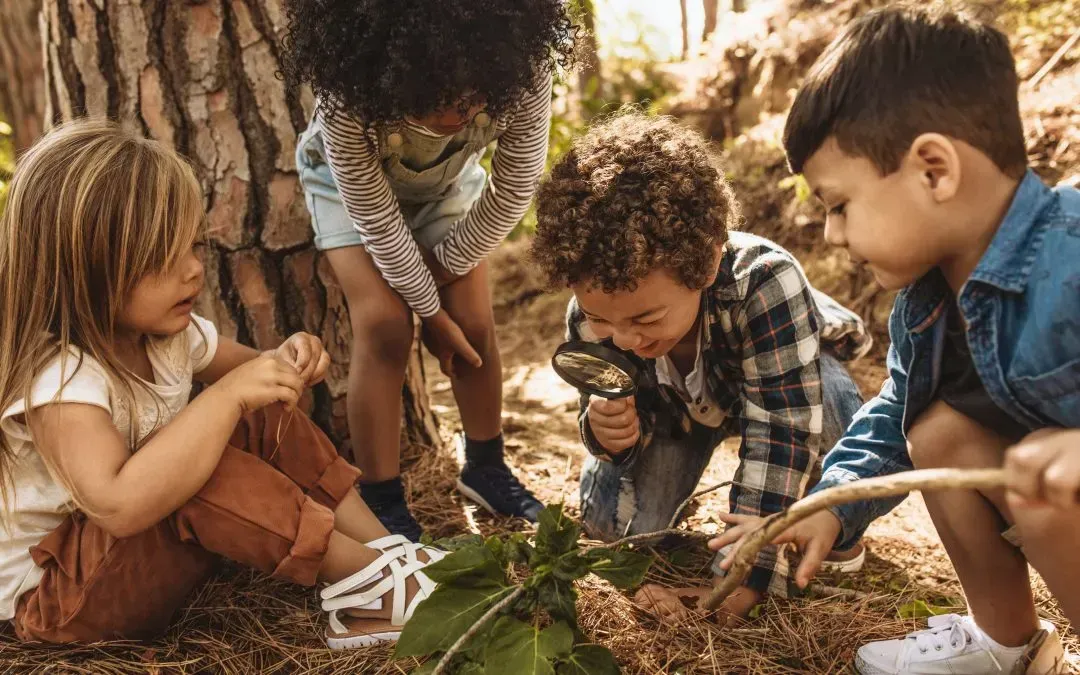
- Identify plants, insects, and animals
- Learn seasonal changes in the environment
- Practice observation without screens
One parent doesn’t need to know everything. Learning alongside kids models curiosity and humility, which is often more powerful than expertise.
Idea 2: Teaching Kids About Local Wildlife
Kids are naturally fascinated by animals. That curiosity can become education.
Simple group activities include:
- Tracking animal prints
- Learning bird calls
- Setting up trail cameras
- Understanding animal habitats and behavior
- Discussing how wildlife survives winter and drought
These lessons build respect for the forest rather than fear or dominance over it.
Idea 3: Learning Edible Plants and Herbs Safely
Teaching kids about edible plants and herbs must be done carefully and responsibly, but when done right, it becomes one of the most grounding outdoor skills they can learn.
Group learning could include:
- Identifying common, safe edible plants
- Learning which plants are dangerous
- Understanding traditional uses of herbs
- Talking about seasonal availability
- Teaching respect for harvesting and conservation
This knowledge builds confidence, awareness, and gratitude for the land.
Idea 4: Forest Skills for Modern Kids
Outdoor skills don’t need to feel old-fashioned to be relevant.
Kids love learning:
- How to read trail signs
- How to orient using landmarks
- Basic shelter concepts
- Fire safety and prevention
- Leave No Trace principles
These skills don’t push kids away from modern life. They balance it.
Idea 5: Create Small Community Learning Circles
Instead of large, expensive programs, smaller groups work best.
Community learning circles could:
- Meet once a week or twice a month
- Rotate locations
- Invite local knowledge holders
- Focus on one topic at a time
These circles can stay informal or eventually grow into nonprofits that apply for educational and environmental grants.
Can This Become a Nonprofit or Program?
Yes.
Outdoor education nonprofits often start exactly this way. Once structured, they can:
- Apply for youth education grants
- Partner with schools and libraries
- Receive donations
- Offer paid coordinator roles
- Provide insurance and legitimacy
This creates sustainability without turning learning into a business transaction.
Why This Fits Tuolumne County Perfectly
Mountain towns have always raised resilient kids — not because life was harder, but because nature was closer.
Tuolumne County already has:
- The land
- The stories
- The wildlife
- The seasons
- The community spirit
What’s needed is intention.
Helping Kids Live a More Genuine Life
A genuine life doesn’t mean rejecting technology. It means knowing how to exist without it.
When kids learn:
- Where food comes from
- How animals live
- How forests function
- How to move through nature with respect
They grow grounded. And grounded kids grow into grounded adults.
Where This Starts
It starts small.
A walk.
A question.
A group text to other parents.
A shared curiosity.
Tuolumne County doesn’t need to invent something new. It needs to reawaken what’s already here.